Wastewater treatment is under growing pressure to remove phosphorus, suspended solids, color, and selected organic contaminants. The UNESCO World Water Development Report 2017 estimated that more than 80% of global wastewater was discharged without adequate treatment. That figure is sobering, although newer regional data vary widely. It also explains why practical chemical treatment remains important for municipalities, factories, and water-reuse projects.
Ferric Sulfate Wastewater Treatment can support reliable coagulation when operators control dosage, pH, rapid mixing, floc formation, and sludge removal. The U.S. Environmental Protection Agency’s Nutrient Control Design Manual identifies chemical precipitation as an established approach for phosphorus reduction. AWWA guidance also emphasizes jar testing and process monitoring before full-scale chemical selection. These references do not make ferric sulfate automatically superior. They provide a professional basis for comparing performance.
This guide examines seven treatment solutions, including phosphorus precipitation, turbidity removal, tertiary polishing, and combined biological-chemical systems. Each option considers removal efficiency, chemical consumption, sludge volume, equipment needs, and operating risk. A two-minute jar test may produce clear water, yet the full plant can behave differently during rain, low temperature, or variable industrial loading. That is the uncomfortable part. “Best” depends on the wastewater.
Real evaluation should include ferric dosage, residual iron, alkalinity demand, settling speed, filter loading, and disposal costs. Operators should also verify local discharge limits and conduct pilot testing with representative samples. A solution that looks inexpensive on paper may create dense sludge, unstable pH, or higher maintenance demands. The following comparison focuses on evidence, field practicality, and decisions that can survive changing influent conditions.
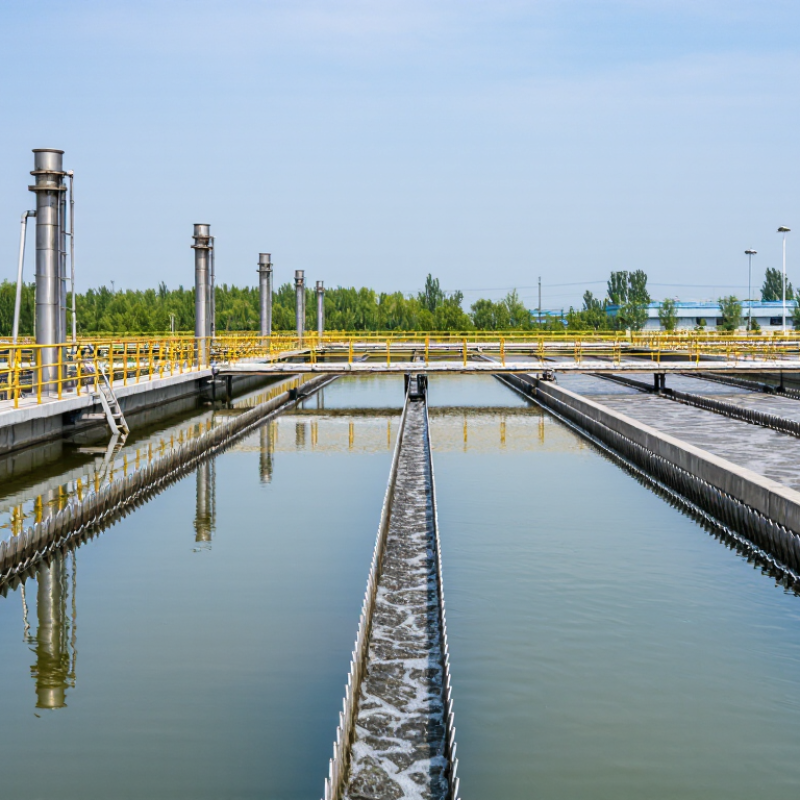
Ferric sulfate is a practical coagulant for wastewater treatment because it hydrolyzes quickly in water. Its positively charged iron species neutralize suspended particles and bind dissolved phosphorus. The resulting flocs can settle in clarifiers or support filtration. It also performs well when wastewater contains variable organic loads. However, its acidic nature can lower pH sharply. Operators should check alkalinity before increasing the dose.
Phosphorus removal is a major application. The U.S. Environmental Protection Agency’s secondary treatment standards commonly require 85% removal of biochemical oxygen demand and suspended solids. Ferric sulfate can help plants meet these limits, especially when biological treatment alone is inconsistent. UN-Water has reported that more than 80% of global wastewater is discharged without adequate treatment. Better chemical control remains important, not optional.
Field experience shows that jar testing is more reliable than fixed dosing. A practical trial may compare several doses while measuring pH, turbidity, phosphorus, and sludge volume. Too little chemical leaves cloudy water. Too much creates excess sludge and higher disposal costs. It can also consume alkalinity faster than expected. The result is not always elegant. Temperature, mixing energy, and wastewater composition can change performance within hours. Industry reports provide useful benchmarks, but each plant still needs site-specific verification.
| No. | Wastewater Treatment Solution | Primary Target | How Ferric Sulfate Works | Typical Operating Conditions | Indicative Starting Dose* | Expected Treatment Benefit | Key Design and Control Considerations |
|---|---|---|---|---|---|---|---|
| 1 | Coagulation and Flocculation | Suspended solids, colloids, turbidity, and a portion of organic matter | Ferric ions hydrolyze in water to form positively charged hydrolysis species and ferric hydroxide flocs. These destabilize negatively charged particles and capture them by adsorption and sweep flocculation. | Rapid mixing: approximately 1–3 minutes Flocculation: approximately 10–30 minutes Common pH range: about 5.5–8.5 | Approximately 10–200 mg/L as commercial ferric sulfate solution, adjusted by jar testing and influent quality | Lower turbidity and improved settling or dissolved-air flotation performance; the actual result depends on particle characteristics and alkalinity. | Monitor pH, alkalinity, turbidity, mixing energy, and floc size. Ferric sulfate is acidic and may require alkalinity addition. |
| 2 | Chemical Phosphorus Removal | Orthophosphate and chemically precipitable phosphorus | Ferric ions react with phosphate to form low-solubility ferric phosphate compounds. Additional phosphorus can be removed through adsorption and incorporation into ferric hydroxide precipitates. | Effective across a broad wastewater pH range; many systems operate near pH 5.5–7.5. Adequate mixing and solids separation are required. | Commonly controlled by the molar Fe:P ratio, often starting around 1.5:1–3:1, then optimized by testing | Reliable reduction of soluble phosphorus and total phosphorus when followed by clarification, filtration, or another solids-removal step. | Higher chemical doses increase ferric sludge production. Measure soluble phosphorus after treatment rather than relying only on total phosphorus. |
| 3 | Tertiary Filtration and Polishing | Residual phosphorus, fine suspended solids, color, and low-level turbidity after biological treatment | A controlled ferric sulfate dose forms microflocs that capture residual contaminants before sand filtration, cloth filtration, or other polishing processes. | Usually applied upstream of filtration; pH and dose should be selected to preserve filterability and avoid excessive headloss. | Approximately 1–30 mg/L as Fe, or a site-specific equivalent dose of ferric sulfate | Improved effluent clarity and enhanced removal of residual soluble phosphorus and fine particles. | Optimize dose against filtrate quality, filter run time, backwash frequency, and ferric carryover. Overdosing can shorten filter cycles. |
| 4 | Arsenic Removal | Arsenate and, after oxidation, arsenite-associated dissolved arsenic | Ferric hydroxide precipitates provide adsorption sites for arsenate. Arsenite is generally less strongly adsorbed, so oxidation to arsenate is commonly considered before ferric coagulation. | Often favorable near pH 5.5–7.5; oxidation, coagulation, and filtration may be required for reliable removal. | Site-specific ferric dose based on arsenic concentration, competing ions, and required residual; jar testing is essential | Can significantly reduce arsenic when ferric hydroxide solids are properly formed and removed. | Consider phosphate and natural organic matter competition, residual arsenic limits, sludge classification, and final filtration performance. |
| 5 | Color and Natural Organic Matter Reduction | Humic substances, tannins, lignin-derived color, and certain industrial organic compounds | Ferric hydrolysis products adsorb dissolved and colloidal organic matter, while coagulation removes the resulting ferric-organic flocs. | Commonly evaluated between pH 4.5 and 7.0, depending on the type of color and organic matter | Approximately 10–150 mg/L as ferric sulfate product, optimized using color, UV254, or dissolved organic carbon results | Reduction in apparent color and selected organic indicators; treatment performance varies substantially with water chemistry. | Check alkalinity, pH depression, residual iron, sludge volume, and the effect of organic matter on downstream disinfection or membrane processes. |
| 6 | Hydrogen Sulfide and Odor Control | Dissolved sulfide, hydrogen sulfide odor, and sulfide-related corrosion risk | Ferric ions oxidize sulfide to elemental sulfur or higher oxidation-state sulfur species while being reduced to ferrous ions. Iron sulfide formation can also bind sulfide under suitable conditions. | Applied at odor or sulfide generation points, such as wet wells, force mains, or sludge systems; maintain adequate contact and mixing. | Dose is based on sulfide loading and contact conditions; a commonly used starting estimate is about 2–3 mol Fe per mol sulfide, followed by field optimization | Lower dissolved sulfide and hydrogen sulfide release, which can reduce odor complaints and sulfide-induced corrosion. | Measure sulfide at the actual control point. Avoid uncontrolled overdosing, and account for added iron, sulfate, pH changes, and downstream sludge impacts. |
| 7 | Sludge Conditioning and Dewatering Support | Poorly dewaterable biological sludge, colloidal solids, and residual phosphorus in sludge streams | Ferric salts neutralize particle charge and create inorganic precipitates that strengthen floc structure, improving capture during centrifugation, belt pressing, or filter pressing. | Dose and mixing energy depend on sludge type, solids concentration, polymer program, and dewatering equipment. | Commonly evaluated by bench or pilot tests; approximate starting trials may range from 0.5–5% ferric sulfate product by dry solids mass | Potentially higher solids capture, improved filtrate clarity, and better cake formation; chemical conditioning may reduce or increase polymer demand. | Evaluate cake solids, filtrate quality, capture rate, polymer consumption, corrosion, and the increase in ash content caused by iron addition. |
| Technical note: Ferric sulfate is an acidic iron(III) coagulant, commonly represented by Fe2(SO4)3. Dose ranges are indicative engineering starting points rather than guaranteed design values. Actual selection should be confirmed through jar testing, pilot testing, alkalinity and pH evaluation, contaminant analysis, and verification of sludge-handling capacity. Commercial ferric sulfate concentration and basicity vary by product specification. | |||||||